
Behind the Holiday Glow: The Silent Struggle of IPV Victims
The holiday season is supposed to be a time of joy, connection, and celebration. But for many survivors of intimate partner violence (IPV), this period brings real danger, not respite. Increased stress around finances and travel, more time at home, and added family pressure can make abuse worse. According to the National Network to End Domestic Violence (NNEDV), these factors can destabilize already volatile situations, and victims may find it harder to reach out for help when their partner is nearby all the time. NNEDV+1
Why the Holidays Can Be Risky
More time at home: With work and school on break, abusive partners are often around more frequently.
Financial stress: The costs of gifts, travel, and family gatherings can amplify tension.
Substance use: Alcohol or drug use often rises during the holidays, which may fuel volatility.
Isolation: Victims may have less privacy to make calls, or they might be trapped in a cycle of control that’s harder to break when everyone else is “celebrating.”
Visitation complications: Co-parenting during the holidays can create additional safety challenges.
Signs of Intimate Partner Violence to Watch for During the Holidays
If you’re gathering with others this season, here are some red flags to look out for:
1. Sudden Withdrawal or Isolation
If someone cancels plans unexpectedly, seems unusually distant, or appears nervous about spending time away from their partner, it could be a sign of controlling behavior at home.
2. Visible Anxiety or Hyper-Vigilance
Survivors may seem on edge, afraid of “doing something wrong,” or overly concerned about how their partner might react to everyday holiday interactions.
3. Unexplained Injuries or Overly Covered Clothing
Wearing long sleeves, scarves, or turtlenecks indoors or in warm settings, especially if it’s out of character, may be an attempt to hide bruises or marks.
4. A Partner Who Monitors or Dominates Every Interaction
If their partner won’t leave them alone, answers questions for them, constantly checks their phone, or seems to “hover,” that can be a sign of coercive control.
5. Financial Restrictions
Someone who can’t chip in for a gift exchange, seems stressed about small purchases, or mentions they “don’t have access to money right now” may be experiencing financial abuse.
6. Changes in Personality or Mood
A person who is usually upbeat but suddenly seems fearful, quiet, or subdued, especially around their partner, may be trying to avoid conflict or retaliation.
7. Excuses That Don’t Quite Add Up
Victims often feel pressured to explain away injuries, missed events, or abrupt changes. Frequent excuses or stories that feel inconsistent may signal something more profound.
On their own, these actions may seem normal or harmless, which is why it’s essential to look for patterns, not isolated moments. Abuse is often revealed through repeated control, intimidation, or manipulation over time. By paying attention to consistent behaviors rather than single incidents, we can better recognize when someone may be experiencing harm and offer more meaningful support.
You don’t have to wait for a perfect moment to show support. During a season when many feel pressure to be merry, your awareness could be a lifeline.
If you or someone you know is in danger or needs support, call the U.S. National Domestic Violence Hotline at 1-800-799-SAFE (7233), visit TheHotline.org, or text START to 88788.
Our team member, Jasmine, designed an infographic that explains what IPV looks like, from emotional and financial abuse to physical violence and coercive control. This resource is intended to help understand the signs. Please share it, save it, and use it to stay alert.
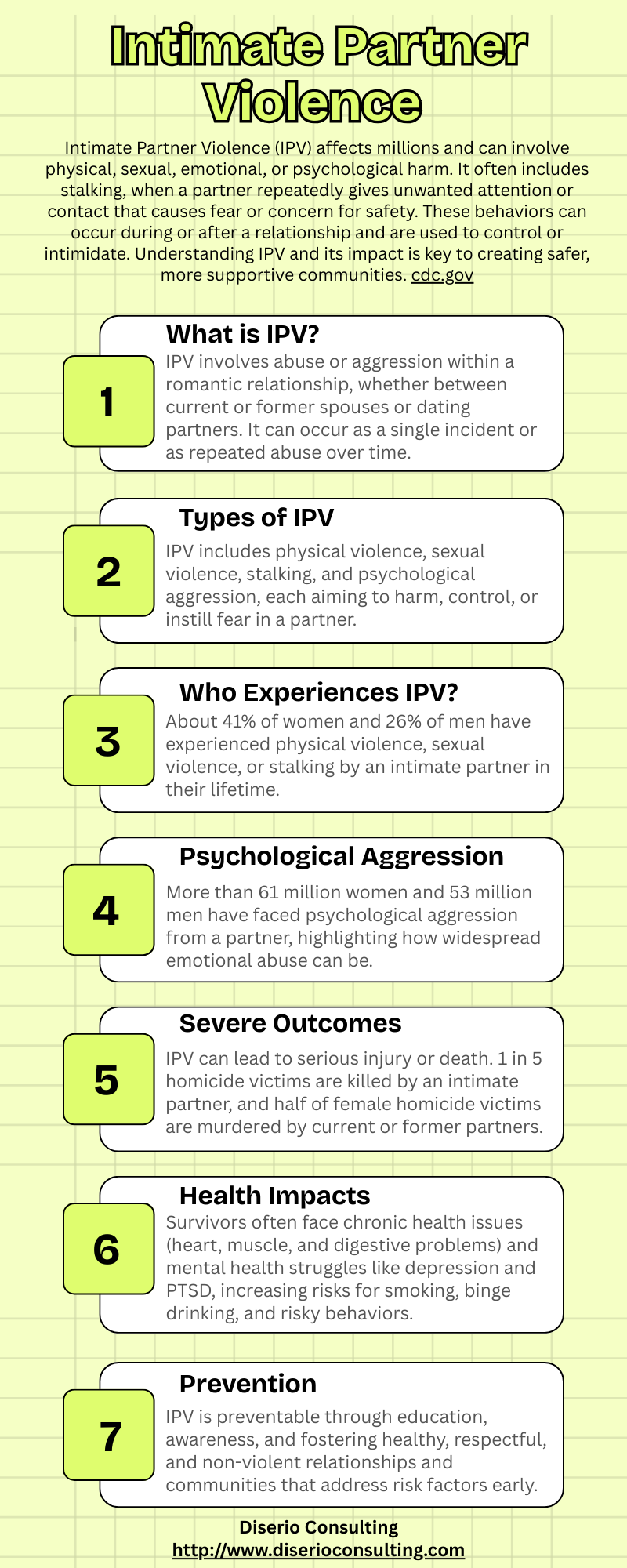
IPV Infographic
If you or someone you care about is experiencing any form of intimate partner abuse, you don’t have to face it alone. Support, guidance, and resources are available. Diserio Consulting is here to help you navigate difficult situations with safety, compassion, and confidentiality. Whether you’re seeking information, looking for ways to support a loved one, or needing assistance yourself, reaching out is a powerful first step toward protection and healing. Victims or those supporting victims can reach out to us anytime here.