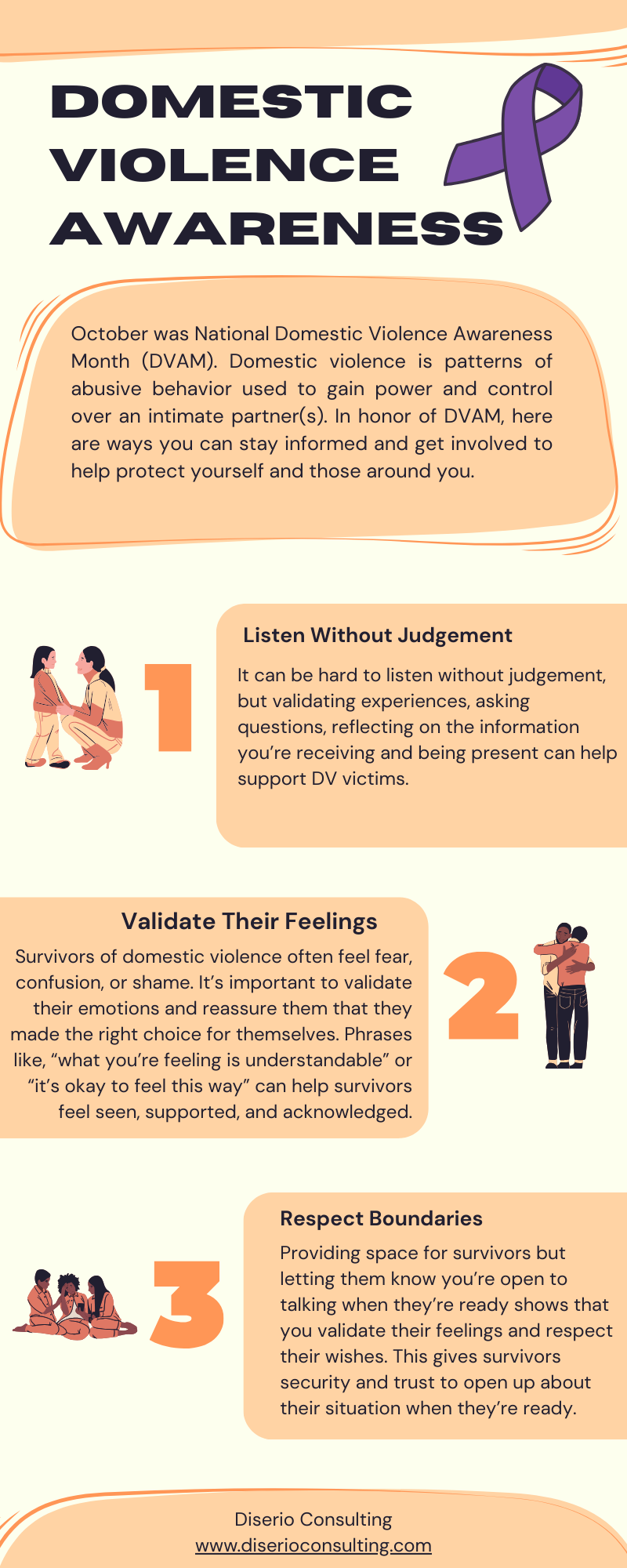
How to Support Victims of Domestic Violence
💜 How to Be There for Domestic Violence Victims 💜
Domestic violence often increases around the holidays, when stress, isolation, and financial pressure are high. Too often, people notice warning signs during the holidays but choose to wait and not address them, hoping things will improve once the holidays pass.
Now that the holidays are over, it’s an important time to check in, start conversations, and take concerns seriously. Support doesn’t require having all the answers—it starts with showing up in the right way.
When someone experiences domestic violence, one of the most powerful forms of support they can receive is simply being believed and respected. Friends, family members, coworkers, and community members often want to help but may feel unsure about what to say or do. The truth is, meaningful support doesn’t require expertise—it requires care, patience, and trust.
Here are ways to support victims
Listen without judgment.
When someone chooses to share their experience with domestic violence, they are taking a significant and often risky step. Listen openly, patiently, and without interruption. Avoid questioning their choices, minimizing what they’ve been through, or rushing to offer solutions. Statements like “Why didn’t you leave?” or “You should just…” can unintentionally reinforce shame or fear. Instead, focus on being present and attentive. Victims are the experts on their own lives, and being believed and heard—without pressure or judgment—can be a powerful step toward safety, healing, and rebuilding trust.
Validate their feelings.
Victims of domestic violence often experience a wide range of emotions, including fear, confusion, guilt, shame, anger, and deep self-doubt. These feelings are common responses to abuse, not signs of weakness. Let them know that what they are feeling is understandable and that the abuse is not their fault—no matter what the abuser may have told them. Avoid minimizing their experience or trying to “reframe” it too quickly. Affirming statements such as “I believe you,” “This is not your fault,” and “You don’t deserve to be treated this way” can help counter the isolation and self-blame many victims carry and can be a step toward rebuilding confidence and trust.
Respect boundaries and timing.
Leaving an abusive situation is a complex process. Research consistently shows that leaving an abusive relationship often takes many attempts before a victim can permanently exit the situation, because leaving safely requires planning, support, resources, and timing. On average, victims may attempt to leave 3–7 times before successfully escaping an abusive partner, with each attempt influenced by fear, financial dependency, concern for children or pets, and the abuser’s controlling behaviors. Understanding that it’s rarely a single event, but rather a process, helps friends, family, and supporters respond with patience, compassion, and practical assistance that can make a real difference. Avoid pressuring someone to take action before they’re ready. Let them know you’re available to talk or help when they choose, and honor their decisions—even if they’re not the ones you would make.
Help connect them to resources.
When appropriate, share information about hotlines, shelters, or advocacy organizations. Offer to help them make a call, find information, provide rides, or plan next steps—but only if they want that support.
Supporting victims means showing up in ways that prioritize their safety, autonomy, and dignity. Awareness is critical, but action—rooted in compassion and respect—is what truly helps victims feel less alone.
If you or someone you know is experiencing domestic violence, confidential help is available 24/7 through the National Domestic Violence Hotline at 1-800-799-SAFE (7233) or thehotline.org, or they can reach out to Diserio Consulting for direction on where to go.
At Diserio Consulting, we believe awareness, education, and data-informed strategies are essential to prevention and victim-centered responses. When communities know how to recognize warning signs and respond effectively, survivors are safer and more likely to seek help.
Diserio Consulting provides customized training for workplaces and organizations on domestic violence, including understanding the dynamics of abuse, identifying warning signs, and learning how to support employees and individuals impacted by violence. Our trainings equip leaders, managers, and staff with practical tools to respond appropriately, foster safer environments, and connect individuals to resources with care and compassion.
To learn more about bringing Diserio Consulting’s training to your organization, please reach out to us to start the conversation.
Our team member, Jasmine, designed an infographic on supporting victims. Please share it, save it, and use it to support victims.